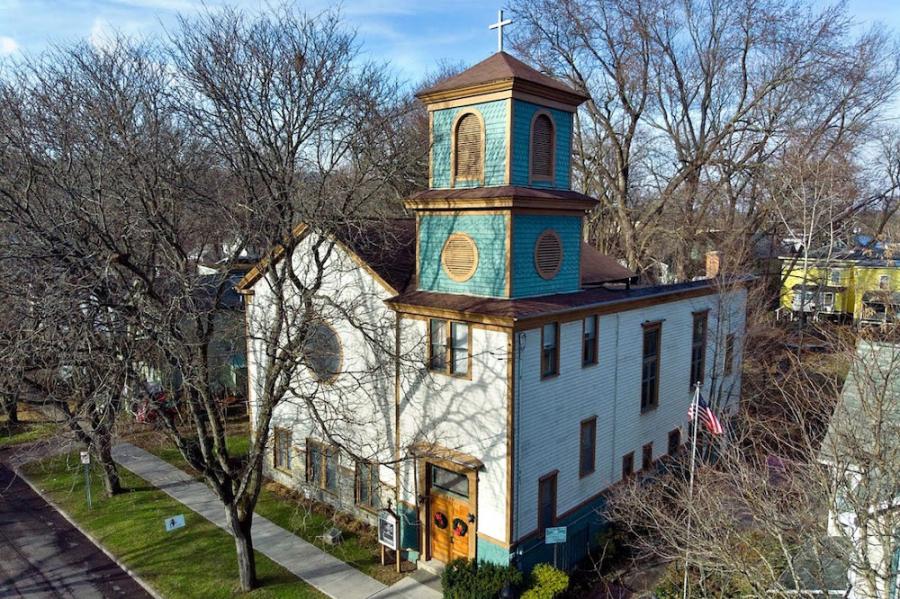
History Center exhibit chronicles excavation at Ithaca’s ‘Freedom Church’
The exhibit on Ithaca’s St. James A.M.E. Zion Church will open on Juneteenth with a community event scheduled for 4 p.m.
Read more Department Homepage
The College of Arts & Sciences
Department Homepage
The College of Arts & Sciences

The Department of Anthropology faculty conduct ethnographic and archaeological as well as biological research that brings hard-won fieldwork to the development of cutting edge social and cultural theories. Our students and faculty work around the globe: from Ithaca, India and Indonesia to the Caribbean and Central America; from Japan, Africa and Nepal to China and the Caucasus; and from the circumpolar North to the Global South.
The exhibit on Ithaca’s St. James A.M.E. Zion Church will open on Juneteenth with a community event scheduled for 4 p.m.
Read more
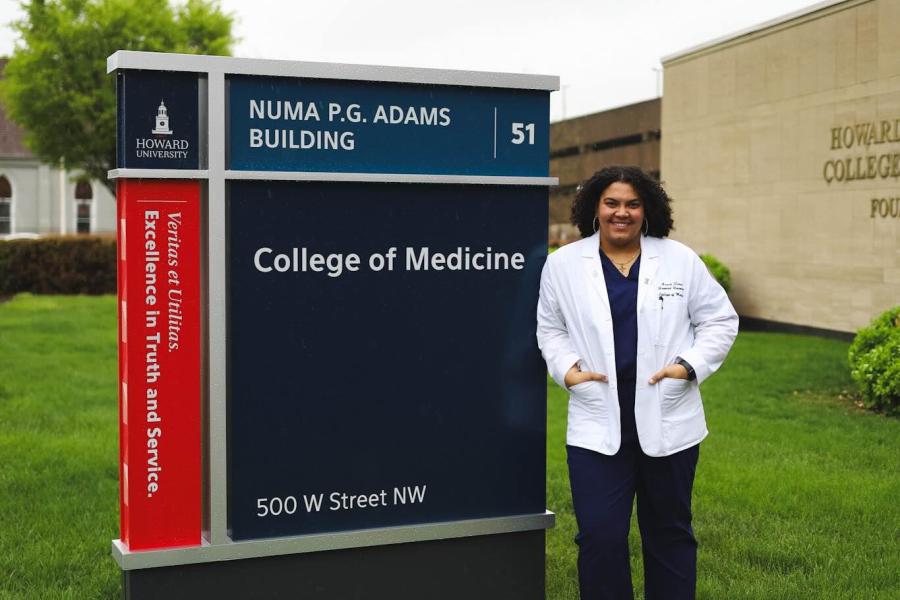
Staes said her major in anthropology has proven to be an asset in medical school.
Read more
Among those being recognized for exceptional teaching and mentorship this year are faculty members Begüm Adalet, Claudia Verhoeven, and Marcelo Aguiar.
Read more
"Anthropology is remarkably well positioned to offer us insight and solutions within some of the most complex issues of today, and the way that it is applied is entirely up to us."
Read more
Aerin Mok is majoring in psychology and anthropology.
Read more
"I am interested in visual anthropology and ethnography, particularly in topics such as ethics, representation, and emerging fields like sensory ethnography."
Read more
"Studying topics in environmental anthropology has allowed me to investigate the cultural, political, and social dimensions of human interactions with the environment across temporal and spatial scales."
Read more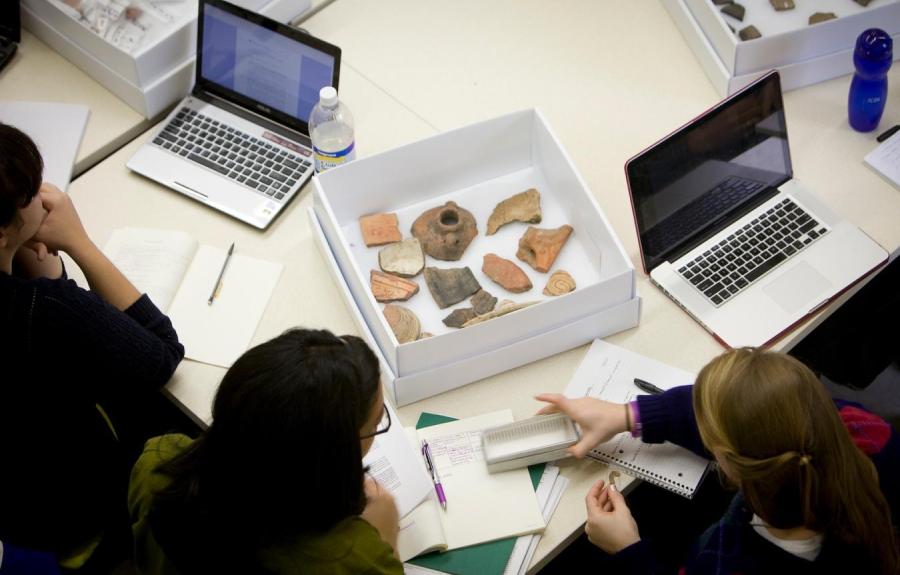
Anthropology provides the global perspective and critical thinking skills that will open doors to a wide range of career paths. The major will also prepare you for graduate study in anthropology.

The Anthropology Collections include approximately 20,000 items representing human activity around the world from the Lower Paleolithic to the present. Archaeological and ethnographic materials are about equally represented.
Cornell University is located on the traditional homelands of the Gayogo̱hó꞉nǫ' (the Cayuga Nation). The Gayogo̱hó꞉nǫ' are members of the Haudenosaunee Confederacy, an alliance of six sovereign Nations with a historic and contemporary presence on this land. The Confederacy precedes the establishment of Cornell University, New York State, and the United States of America. We acknowledge the painful history of Gayogo̱hó꞉nǫ' dispossession, and honor the ongoing connection of Gayogo̱hó꞉nǫ' people, past and present, to these lands and waters. This land acknowledgment has been reviewed and approved by the traditional Gayogo̱hó꞉nǫ' leadership.